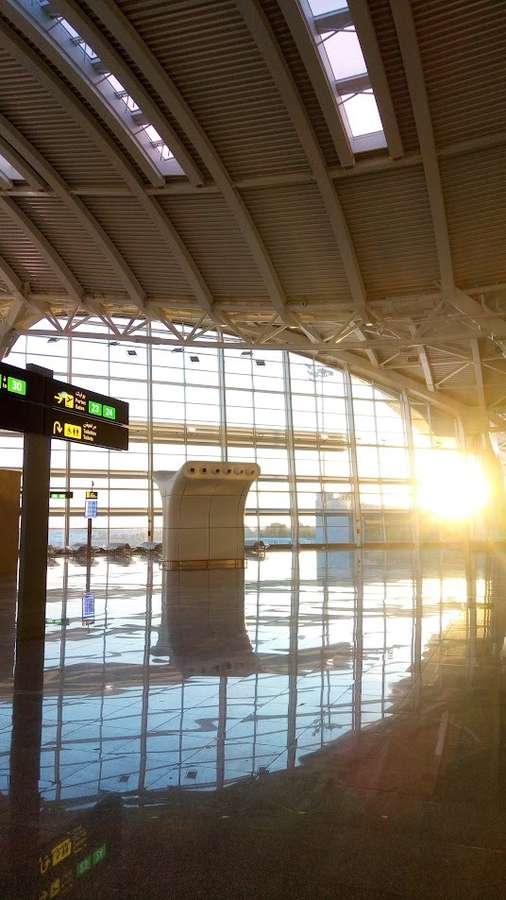




At an airport, thousands of people pass through the terminals every day, resulting in a high concentration of people in enclosed and complex spaces. This massive influx, combined with the large amount of electrical equipment, fuels and flammable materials present, significantly increases the risk in the event of a fire. In the event of such an emergency, the rapid spread of fire and smoke can put both passengers and staff in grave danger.
Passive systems are essential for overall safety in high-traffic infrastructure such as airports. Furthermore, these systems are designed to integrate discreetly and aesthetically into the architectural environment.
COMPREHENSIVE SOLUTIONS TAILORED TO EACH PROJECT
At Koneba we have been involved in the implementation of passive fire protection solutions at various airports, adapting to the specific requirements of each facility and ensuring operational continuity at all times. Furthermore, we collaborate during the design phases, providing technical support to engineering firms, and offer technical support during the installation process to ensure the correct integration and operation of the systems.
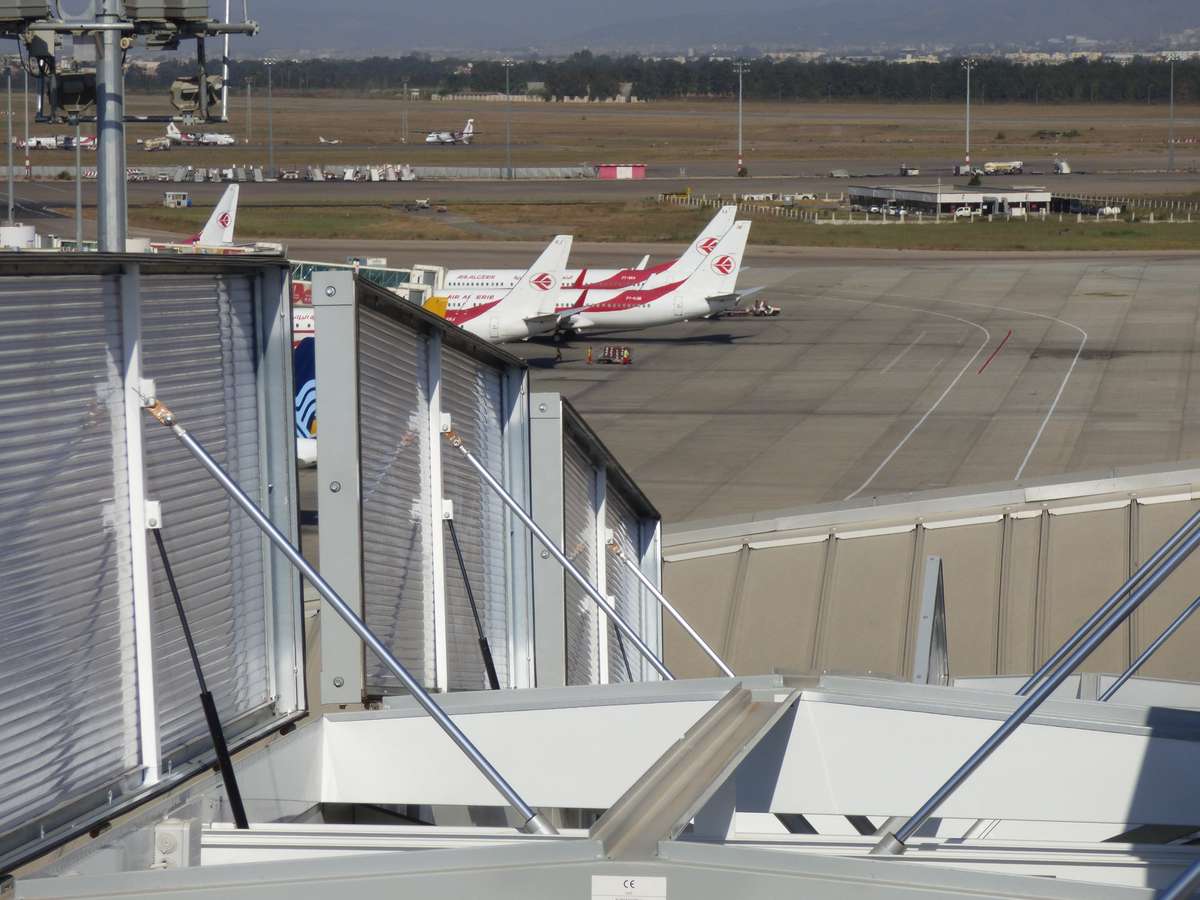
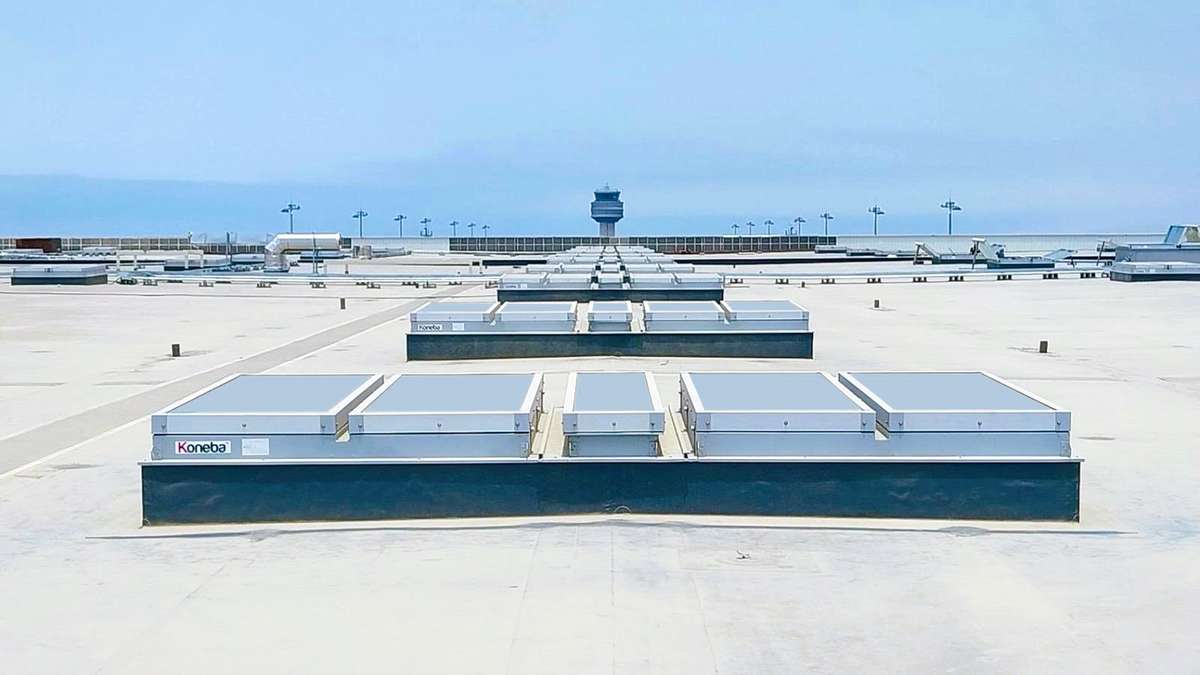
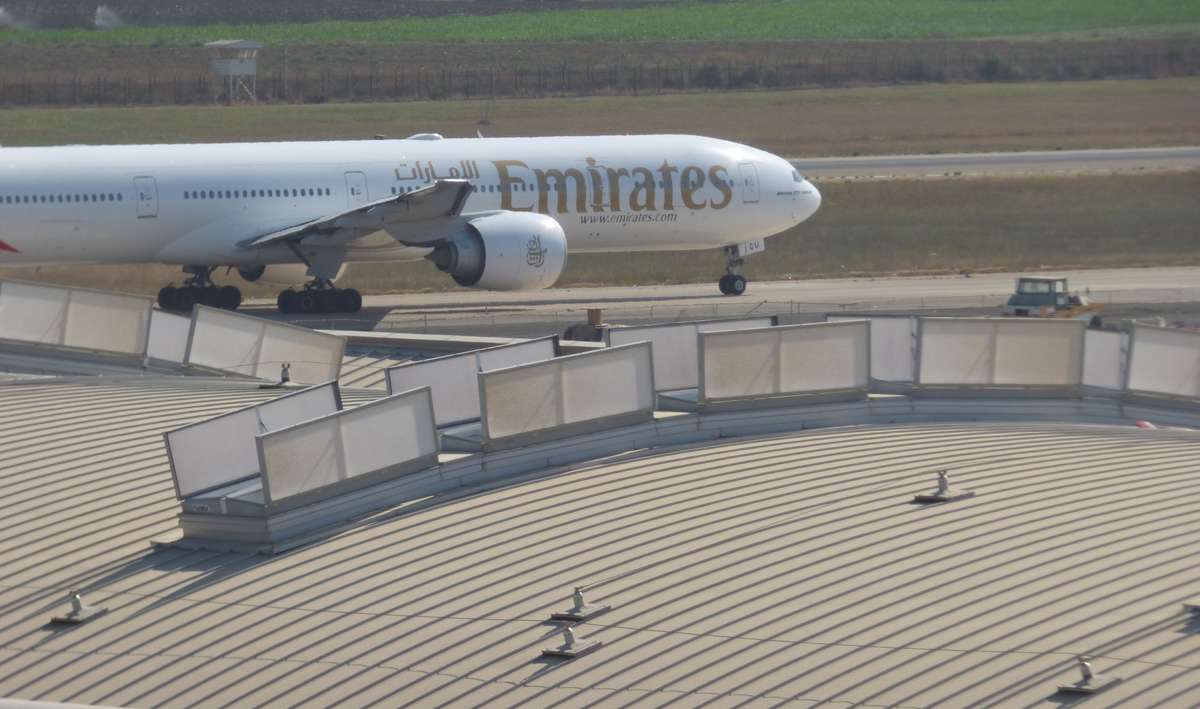
These types of solutions have already been successfully implemented in high-traffic airport terminals, both nationally — at airports such as Madrid, Gran Canaria, Palma de Mallorca and Seville — and internationally, in facilities such as Jorge Chávez International Airport in Lima (Peru) and Algiers International Airport.
SMOKE AND TEMPERATURE CONTROL: KEY TO EVACUATION
Smoke and Heat Exhaust Ventilation Systems (SHEVS) help maintain a smoke-free zone, ensuring that escape routes remain visible and operational. This facilitates both the evacuation of occupants and the intervention of emergency services, whilst also reducing the thermal impact on the building’s structure.
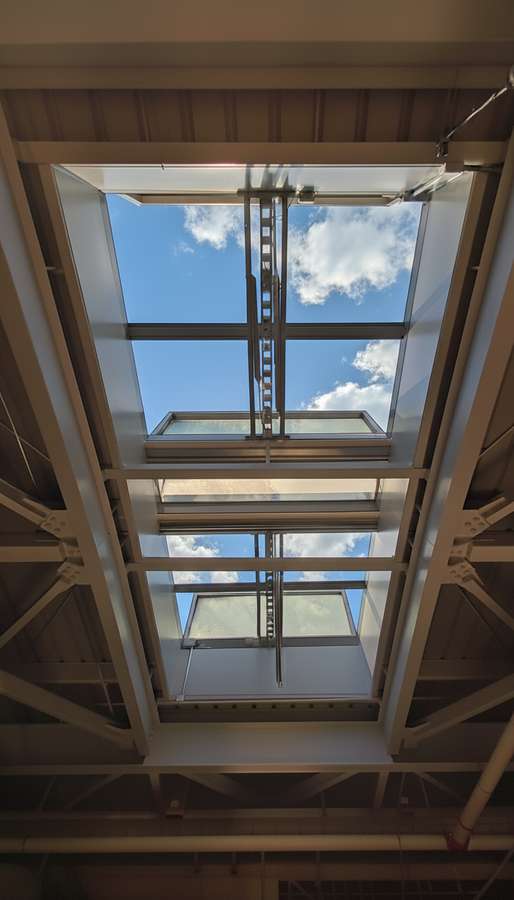
These systems comprise elements such as natural smoke vents, air inlets and, in many cases, smoke curtains.
The main function of smoke vents is to allow the evacuation of smoke and hot gases generated during a fire, helping to create a safer environment. In addition, they can be used for the building’s daily natural ventilation and allow overhead light to enter, improving comfort and reducing energy consumption.
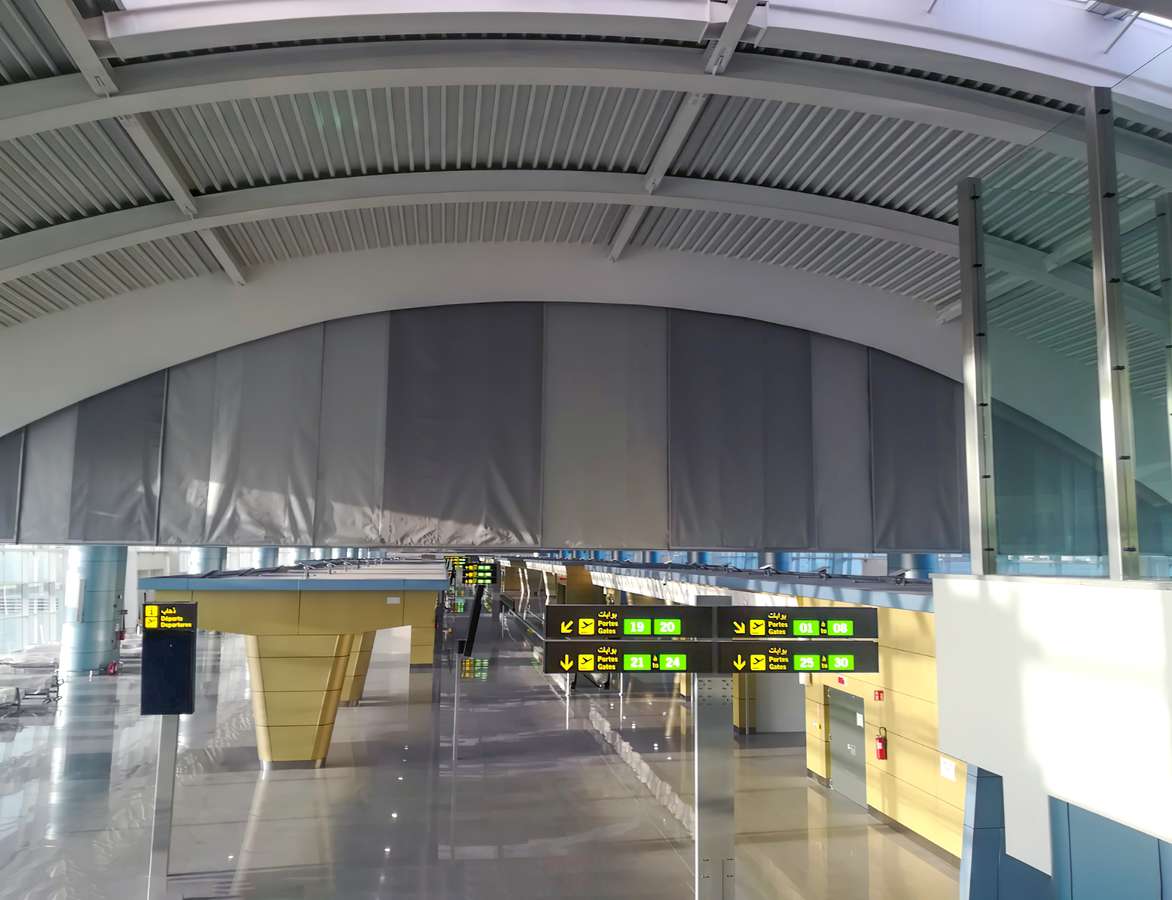
Smoke curtains contain and channel smoke, preventing it from spreading throughout the premises. Their installation is particularly important in open or large-volume spaces, such as airport terminals, where it is essential to guide the movement of smoke in a controlled manner.
FIRE COMPARTMENTALISATION WITHOUT COMPROMISING ON DESIGN
Fire compartmentalisation is another key element of passive fire protection. In this regard, fire curtains offer an effective solution in environments where open-plan spaces predominate.
Unlike traditional systems, these curtains can be integrated into suspended ceilings and remain concealed until activated, allowing the aesthetics and spaciousness of the area to be maintained without compromising safety.
#AlwaysProtected